
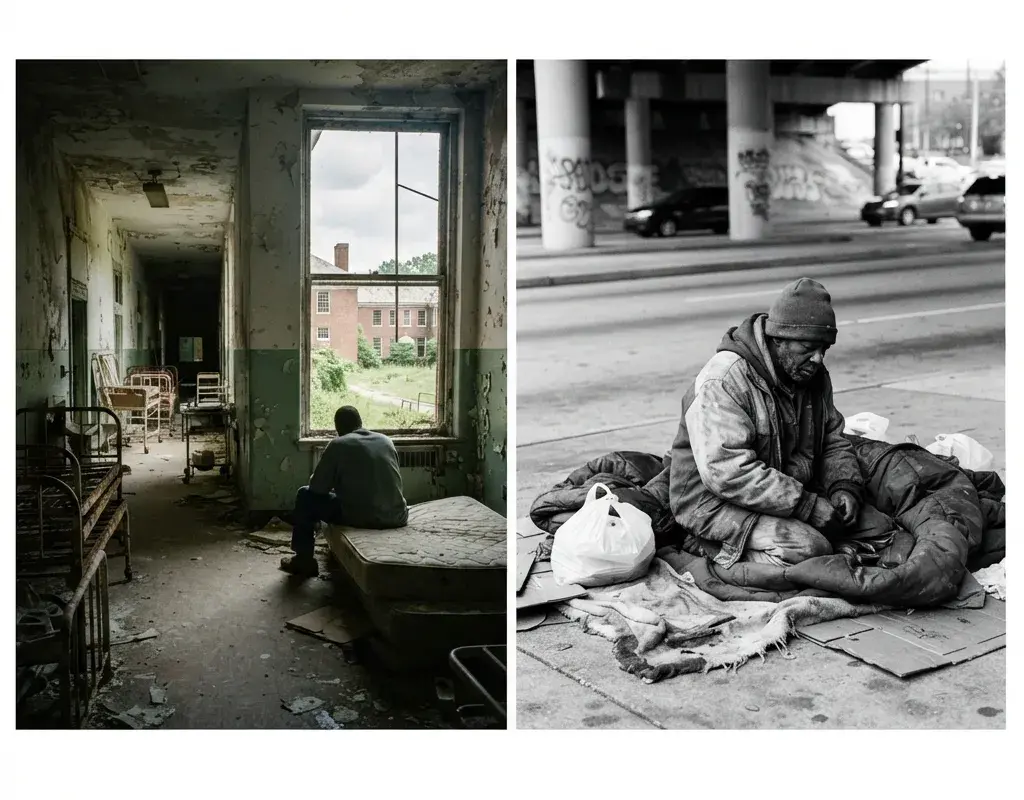
The current crisis of homelessness across Georgia cannot be understood without looking back at the shuttering of its massive state run psychiatric hospitals. For decades, facilities like Central State Hospital in Milledgeville served as behemoths of mental health care, once housing more than 13,000 patients. While these institutions were meant to provide sanctuary and treatment, they often devolved into understaffed and unsanitary warehouses where the quality of care was widely regarded as unacceptable by both staff and local residents.
During the movement toward deinstitutionalization in the latter half of the twentieth century, Georgia began closing these large wards in favor of what was promised as community based care. The theory was that patients would fare better in smaller settings integrated into society rather than isolated behind asylum walls. However, this transition proved to be a failure of planning and political will. Instead of moving into supportive housing or receiving consistent outpatient therapy, thousands of vulnerable individuals were effectively dumped onto the streets with nowhere to go.
This systemic collapse created a pipeline from failed medical institutions directly to sidewalk encampments. Many who suffered from severe mental illnesses found themselves abandoned by a state that closed their beds but never built the necessary infrastructure to support them locally. Rather than investing in comprehensive behavioral health networks, the burden shifted toward an overburdened legal system and emergency rooms, leaving those most in need to survive on their own in precarious conditions.
Today, the legacy of this mismanagement persists as Georgia struggles with high rates of street homelessness among the mentally ill. Despite various administrative shifts and claims of progress in healthcare delivery, critics argue that politicians continue to ignore the root cause of the problem while cutting essential services. Until there is a genuine commitment to rebuilding a functional network of psychiatric support and permanent housing, the streets remain the default ward for those whom the state forgot.